
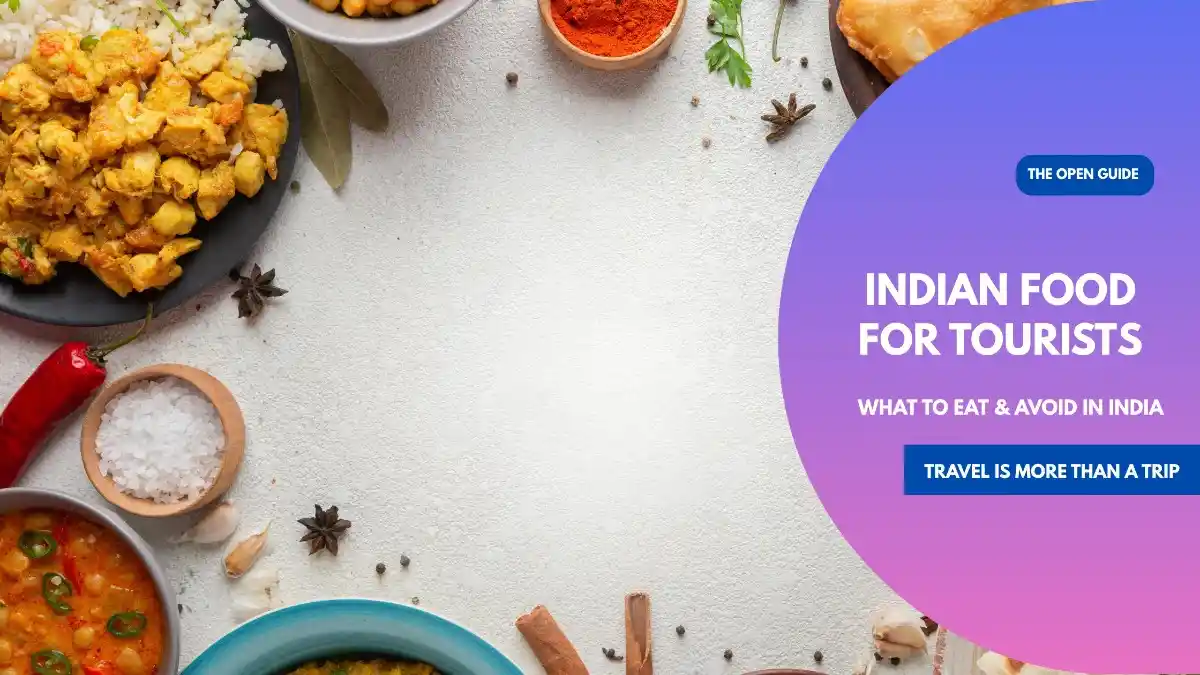
India is not just a country you visit—it’s a place you taste. From rich curries to spicy street snacks, every region offers something new. For tourists, Indian food can feel exciting, overwhelming and sometimes confusing all at once.
If you’re coming to India for the first time, food will probably be one of the biggest surprises. It’s everywhere, it’s loud, it’s spicy, and honestly, it can be a little confusing at the start.
One dish tastes completely different from the next city. Something that feels mild in Delhi might be way spicier in Chennai. And yes, you’ll also find food that looks unfamiliar but tastes amazing.
This guide is just a simple, no-stress breakdown of what to eat in India, what’s safe and what you might want to skip at first.
Indian food basics (so you don’t feel lost)
North vs. South – it really matters
Food in India isn’t one style. It changes by region.
In the north, you’ll see creamy curries, lots of bread like naan and rich gravies. In the south, it’s more rice-based, lighter, and often comes with coconut or tangy flavors.
Both are worth trying. Just don’t expect them to taste similar.
Vegetarian food is everywhere
One thing that surprises most tourists: you don’t struggle to find vegetarian food here.
In fact, in many places, veg options are more common than non-veg. Even restaurants that serve meat usually have a full vegetarian menu.
Spice doesn’t always mean “burning hot.”
A lot of people think Indian food = super spicy. That’s not always true.
Spices are more about flavor than heat. Still, if you’re not used to it, just say, “Less spicy, please.”
People will understand.
What to Eat in India for First-Time Tourists
North Indian comfort food
Start here if you like rich, filling meals:
- Butter Chicken – creamy, mild, and super popular with tourists
- Dal Makhani – slow-cooked lentils with butter (very comforting)
- Naan / Paratha – soft bread you use to scoop up curries
This is usually the safest “first Indian meal” for foreigners.
South Indian simple favorites
If you want something lighter:
- Dosa – crispy, thin pancake filled with potatoes
- Idli & Sambar – soft rice cakes with lentil soup
- Biryani – spiced rice with meat or vegetables (very flavorful)
South Indian food is great when you don’t want something too heavy.
Street food (try it, but be smart)
Street food is a big part of India’s food culture. It’s also where things can get risky if you’re not careful.
Try these:
- Pani Puri (Gol Gappa) – crunchy, spicy, tangy water-filled snack
- Chaat – a mix of sweet, spicy, and crunchy flavors
- Vada Pav – basically India’s version of a spicy burger
Tip: Always go to stalls with crowds. That usually means fresh food.
Don’t skip desserts
Indian sweets are a whole experience on their own:
- Gulab Jamun – soft, syrupy, melts in your mouth
- Rasgulla – light and spongy cheese balls
- Jalebi – crispy, sticky, and super sweet
If you like dessert, you’ll be happy in India.
Quick Food Guide for Tourists
| Food Type | Best Dish | Spice Level | Safe for Beginners |
|---|---|---|---|
| North Indian | Butter Chicken | Mild | Yes |
| South Indian | Dosa | Low | Yes |
| Street Food | Pani Puri | Medium | Limited |
| Desserts | Gulab Jamun | Sweet | Yes |
Food Safety Tips for Tourists in India
Let’s keep this simple.
Be careful with water
Don’t drink tap water. Stick to sealed bottled water.
Avoid raw foods in unknown places
Skip raw salads and cut fruits from street vendors. Not because they look bad, but because water hygiene can be inconsistent.
Ice can be risky
In smaller places, ice might be made from tap water. When unsure, avoid it.
Pick busy places
If locals are eating there in large numbers, it’s usually a good sign.
What to avoid (at least in the beginning)
You don’t need to avoid everything—but go slow with the following:
- Very spicy dishes on day one
- Street food from empty stalls
- Raw salads or unpeeled fruits outside hotels
- Anything that looks like it’s been sitting out too long
Your stomach needs time to adjust. That’s normal.
Vegetarian vs non-vegetarian in India
Vegetarian food is easy
You’ll never struggle as a vegetarian here. It’s everywhere, and it’s not boring at all.
If you eat meat
Start with simple dishes like the following:
- Chicken curry
- Butter chicken
- Fish curry (especially near coastal areas)
Avoid jumping straight into very spicy local specialties on day one.
Drinks you should try
Masala Chai
This is not just tea. It’s a habit in India. Sweet, milky, and spiced.
Lassi
A yogurt drink. Sweet lassi is like a dessert. The salted one is refreshing in hot weather.
Sugarcane juice
Fresh and amazing—but only from clean-looking machines.
Just eat slowly and enjoy it
Indian food can feel like a lot at first. Too many choices, too many spices, too many unfamiliar names.
But once you slow down and start with simple dishes, it becomes one of the best food experiences you’ll ever have while traveling. Food is a big part of any travel guide to India, and exploring it at your own pace makes the journey even more memorable.
Don’t try to “handle everything” on day one. Start easy, follow where locals eat and you’ll figure it out naturally.
And honestly—that’s the fun part.
Frequently Asked Question
Is Indian food always spicy?
No. Many dishes are mild. You control the spice level when ordering.
Is street food safe in India?
Yes, but only if you choose clean, busy vendors and avoid raw items.
What should a first-timer eat first?
Butter chicken, dosa, or simple dal-rice is a good start.
Is vegetarian food easy to find?
Extremely easy. In fact, it’s one of the best countries for vegetarians.
What should I avoid drinking?
Avoid tap water and anything with unclear ice sources.
