
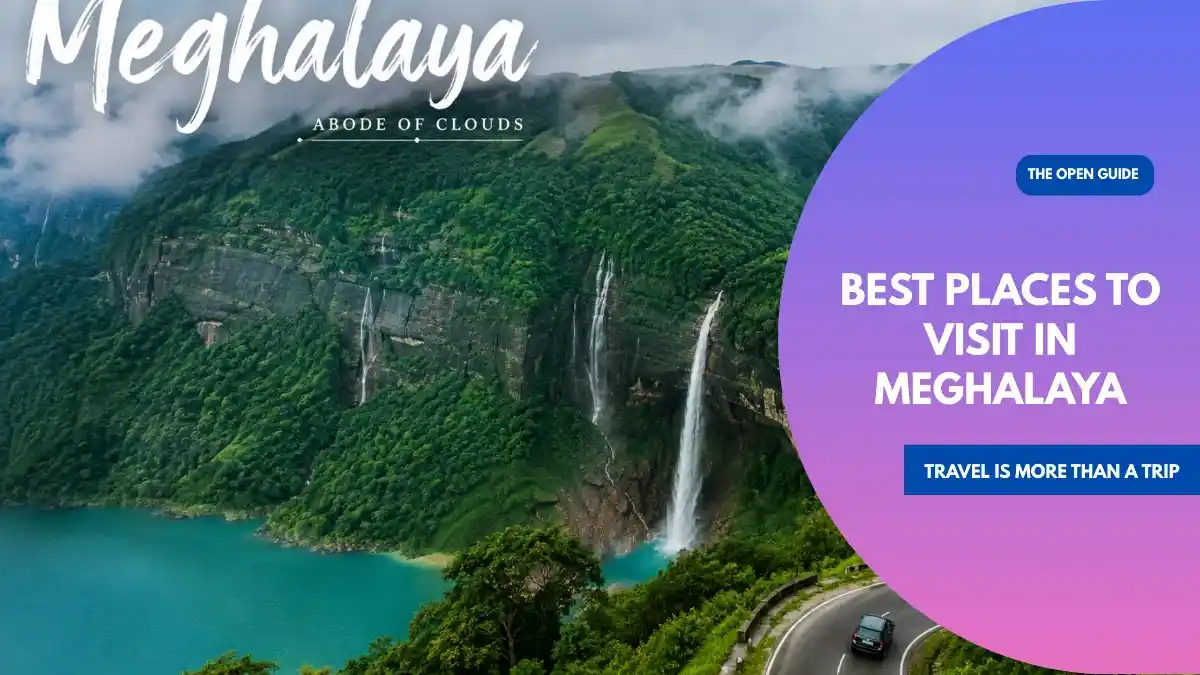
Meghalaya, which literally means “Abode of the Clouds” sits in Northeast India and packs more natural wonders into one state than most people think possible.
Here you will find India’s tallest plunge waterfall, the world’s only double-decker living root bridge, Asia’s cleanest village and a river so clear that boats appear to float in mid air. Add misty canyons, ancient limestone caves, and the warm hospitality of the Khasi, Jaintia and Garo tribes and you get a destination unlike anything else in the country.
This guide covers the 10 best places to visit in Meghalaya, a practical 7-day itinerary, how to reach the state, the best time to go and honest tips to make your trip smooth and memorable.
What This Guide Covers
- 10 Best Places to Visit in Meghalaya
- Suggested 7-Day Itinerary
- Best Time to Visit
- How to Reach Meghalaya
- Travel Tips
10 Best Places to Visit in Meghalaya
1. Shillong
The Scotland of the East – Your Gateway to Meghalaya
Start your Meghalaya journey in Shillong, the state capital. This hill station sits at around 1,500 metres above sea level and blends colonial-era architecture with a lively local culture. The city earned the nickname “Scotland of the East” for its rolling green hills and cool climate.
Ward’s Lake in the heart of the city is perfect for a morning stroll. Shillong Peak gives you sweeping views of the entire valley on a clear day. Elephant Falls, just a short drive away, cascades in three tiers through a lush forest. The Don Bosco Museum is one of the finest ethnographic museums in Asia — it tells the story of all the Northeast states in vivid detail.
Shillong also has a buzzing café culture and a thriving music scene. The local market, Police Bazar, is great for picking up Khasi handicrafts, bamboo products and locally grown spices.
Insider Tip
Visit Elephant Falls early in the morning – by 10 AM the crowds arrive. The third tier at the bottom is the most dramatic but requires a steep climb down.
2. Cherrapunjee (Sohra)
One of the Wettest Places on Earth – and the Most Beautiful
Cherrapunjee, locally called Sohra, is the crown jewel of Meghalaya tourism. It holds records for being one of the wettest places on the planet, and that rain feeds some of India’s most spectacular waterfalls and landscapes.
Nohkalikai Falls is the star attraction here. It drops 340 metres (1,115 feet) in a single, thundering plunge into a turquoise pool below making it India’s tallest plunge waterfall. The name translates to “Leap of Likai,” tied to a haunting Khasi legend that makes the visit even more memorable. The viewpoint offers a panoramic look at the falls framed by lush green cliffs.
Seven Sisters Falls is another showstopper — seven streams of water spread across the hillside like threads of silk. Mawsmai Cave lets you walk through a maze of limestone formations including stalactites and stalagmites. Thangkharang Park offers a stunning view of the Bangladesh plains stretching out below.
Insider Tip
Cherrapunjee’s waterfalls are most powerful during and just after the monsoon (June–October). For clear skies and photography, visit between November and March.
3. Double Decker Living Root Bridge, Nongriat
The World’s Only Double-Decker Root Bridge – A Living Wonder
This is the single most iconic attraction in all of Meghalaya. Located in Nongriat village near Cherrapunjee, the Double Decker Living Root Bridge is not just a bridge – it is a living, breathing work of bio-engineering that has been growing for over 180 years.
The Khasi tribe built these bridges by training the aerial roots of rubber trees (Ficus elastica) through hollowed betel nut trunks, guiding them to grow across streams and intertwine on the other side. A new root bridge takes at least 15 years to become strong enough for people to cross and it keeps gaining strength over the decades. The double-decker version came to be because a seasonal flood once submerged the original single bridge – so the Khasi built a second level above it.
To reach the bridge, you trek down 3,000+ steep steps from Tyrna village (about a 1.5-hour descent). The trek itself is beautiful – you pass through dense tropical forest, cross hanging bridges, and hear waterfalls all around. There is also a natural swimming pool near the bridge where you can take a dip.
This is the only double-decker living root bridge in the world. No photograph does it justice – you have to stand on it to feel the sheer wonder of nature shaped by human hands across generations.
Insider Tip
Start the trek at 7 AM to avoid afternoon heat and crowds. Wear sturdy shoes — the steps are steep and wet. Carry enough water and light snacks. Homestays are available in Nongriat if you want to stay overnight.
4. Dawki & the Umngot River
Boats That Float in Mid-Air – India’s Clearest River
Dawki sits right on the India-Bangladesh border and is home to the Umngot River — one of the clearest rivers you will ever see anywhere in the world. The water is so transparent that boats appear to float in thin air. Photographs of this river have gone viral across the globe, and the real thing is just as breathtaking in person.
You can rent a boat and glide across the crystal water, spotting colourful fish and the pebbled riverbed below without even putting your face in the water. The emerald-green river sparkles under the sun while the Khasi and Jaintia hills rise on both banks.
Beyond boating, Dawki also offers kayaking, cliff jumping, zip-lining, and camping on the riverbanks. During the winter months, the water clarity is at its absolute peak. The small town itself has a lively border market that is worth exploring.
Insider Tip
The river is clearest from October to May. Avoid visiting right after heavy rain when silt clouds the water. Rent a boat in the morning for the best light — afternoon sun creates glare on the water surface.
5. Mawlynnong Village
Asia’s Cleanest Village – A Lesson in Community Living
Mawlynnong earned international recognition as Asia’s Cleanest Village, and a visit here shows you exactly why. Bamboo dustbins line every street. Plastic is completely banned. Every household participates in keeping the village pristine, and the result is flower-filled lanes, manicured gardens, and spotless pathways that seem almost too perfect to be real.
The village also has a Sky Walk — a bamboo structure that lets you climb up for panoramic views of the Bangladesh plains and the surrounding forest. A single-level living root bridge in the nearby Riwai village is easily accessible and a great alternative for those who cannot tackle the intense Double Decker trek in Nongriat.
The local Khasi hospitality is genuine and warm. You can try traditional meals, buy locally made bamboo crafts, and learn about the community’s matrilineal society — one of the few in the world where property and family names pass through the mother’s line.
Insider Tip
Combine Mawlynnong and Dawki in a single day trip from Shillong — they are just 12 km apart. Stay for lunch at a village homestay and try the traditional Jadoh (rice cooked with pork) for an authentic experience.
6. Laitlum Canyons
End of the Hills – Meghalaya’s Most Dramatic Viewpoint
Laitlum Canyons sits about 35 km from Shillong and delivers some of the most dramatic landscapes in Northeast India. The name “Laitlum” means “End of the Hills” in the Khasi language, and the views absolutely live up to that name — steep, terraced ridges plunge into deep green valleys while clouds drift through at eye level.
The canyon area is relatively less crowded compared to other Meghalaya tourist spots, making it a favourite for photographers and hikers seeking peace. You can trek along the canyon rim, descend into the valley, or simply sit at the viewpoint and watch the mist roll in. Sunrise and sunset visits are particularly spectacular.
Insider Tip
Visit on a weekday to avoid weekend crowds. Carry a light jacket even in summer — the canyon winds can be cold. Early morning visits offer the best chance of misty, cloud-filled valley views.
7. Krang Suri Falls
Meghalaya’s Most Photogenic Waterfall – Turquoise Perfection
If Nohkalikai is the most powerful waterfall in Meghalaya, Krang Suri is the most visually perfect. Located in the Jaintia Hills region, this waterfall cascades into a stunning turquoise pool surrounded by dense green forest. The vivid blue-green colour of the water, caused by natural minerals in the rock, makes it look almost unreal.
Unlike many waterfalls where you can only watch from a distance, Krang Suri lets you swim in the pool at the base. The water is cold and crystal clear. A small rope bridge and some basic facilities make it accessible and enjoyable for families and solo travellers alike.
Krang Suri is part of the “Jowai–Dawki belt” of Meghalaya, which also includes the beautiful Phe Phe Falls – a hidden gem that requires a short jungle trek to reach but rewards you with a magnificent curtain of water and a natural swimming pool.
Insider Tip
Carry a change of clothes — almost everyone ends up swimming here. The falls are best visited between October and May when the water is clear; during heavy monsoon the colour turns muddy.
8. Umiam Lake
Shillong’s Scenic Reservoir – Perfect for a Calm Half-Day
Umiam Lake, also called Barapani, sits about 15 km north of Shillong and was formed by damming the Umiam River in 1965. The result is a vast, beautiful reservoir surrounded by pine-covered Khasi Hills that reflects the sky and trees in perfect stillness on a calm day.
The lake is ideal for water sports — you can kayak, water ski, pedal-boat, or take a speed boat ride across the shimmering surface. The surrounding area has a park and viewpoints that make for pleasant picnic spots. Many travellers stop here on the drive between Guwahati and Shillong, and it makes for a lovely half-day detour.
Insider Tip
Stop here during your drive from Guwahati to Shillong rather than making a separate trip. The golden hour before sunset turns the lake into a photographer’s dream.
9. Mawsmai Cave, Cherrapunjee
An Underground Cathedral of Limestone and Light
Meghalaya sits on some of the most extensive limestone formations in South Asia, which means its cave systems are extraordinary. Mawsmai Cave near Cherrapunjee is the most accessible of these — a well-lit, 150-metre long cave where you squeeze and duck through passages lined with ancient stalactites and stalagmites.
The cave has narrow sections that add an element of adventure, but the overall difficulty is manageable for most visitors including children. More adventurous travellers can explore Arwah Cave nearby, which contains ancient fossils, or the massive Krem Liat Prah cave system — one of the longest sandstone caves in Asia, requiring a guide and equipment.
Insider Tip
The cave is well-lit but some sections are tight. Do not visit in very wide clothing. Wear shoes with grip — the cave floor is wet and slippery. Visit in the morning before tour groups arrive.
10. Balpakram National Park
The Land of Spirits – Meghalaya’s Wild, Untouched Heart
For those seeking raw, offbeat Meghalaya, Balpakram National Park in the Garo Hills is a revelation. Local Garo tribes call it the “Land of Perpetual Winds” or the “Land of Spirits” — a place where the souls of the departed are believed to rest. The landscape matches that mystical reputation: deep gorges, dense jungle, grasslands, and a plateau that drops dramatically into a vast canyon.
The park is home to red pandas, clouded leopards, golden cats, elephants, and an enormous diversity of birds and reptiles. It remains one of the least-visited and least-commercialised corners of Meghalaya — if you want true wilderness away from crowds, this is it.
Getting here requires an extra day of travel from Shillong (roughly 6–7 hours), but the reward is a side of Meghalaya that feels completely different from the tourist trail.
Insider Tip
Hire a local guide from Tura town — they know the park well and the trails are unmarked. October to April is the best window. Carry all your food and water since facilities inside the park are minimal.
Suggested 7-Day Meghalaya Itinerary
This itinerary covers the highlights of the Khasi and Jaintia Hills. Add 2 more days to include Balpakram in the Garo Hills.
Arrive Guwahati → Shillong
Fly or take the train to Guwahati. Drive to Shillong (~3 hours). Stop at Umiam Lake on the way. Check in, explore Police Bazar market, eat local Khasi food at a dhabha.
Shillong Sightseeing
Ward’s Lake, Don Bosco Museum, Shillong Peak (morning for clear views), Elephant Falls. Evening at Café Shillong or a local music spot.
Laitlum Canyons + Cherrapunjee
Morning at Laitlum Canyons for dramatic views. Drive to Cherrapunjee. Nohkalikai Falls viewpoint, Seven Sisters Falls, Thangkharang Park. Overnight in Cherrapunjee.
Double Decker Root Bridge Trek
Early start (7 AM) from Tyrna village. 3,000+ steps down to Nongriat, the Double Decker Root Bridge, and the natural swimming pool. Tough but unforgettable. 6–7 hours total.
Mawsmai Cave + Mawlynnong + Dawki
Morning: Mawsmai Cave, Arwah Cave. Drive to Mawlynnong — Asia’s cleanest village, Sky Walk, Riwai Root Bridge. Afternoon: Dawki for a magical boat ride on the Umngot River. Stay at Dawki.
Jowai + Krang Suri Falls
Drive through the Jaintia Hills. Stop at Krang Suri Falls for a swim in the turquoise pool. Visit Jowai town and the Thadlaskein Lake. Return to Shillong.
Depart
Morning walk around Shillong, pick up last-minute souvenirs from the market. Drive back to Guwahati for your flight or train home.
Best Time to Visit Meghalaya
Meghalaya has something to offer year-round, but different seasons suit different types of travellers.
Post-Monsoon & Winter
October – February
Crystal-clear Dawki River, pleasant weather, clear views from Laitlum and Shillong Peak, waterfalls still flowing strong. Ideal for trekking and outdoor activities.
Monsoon Season
June – September
Waterfalls like Nohkalikai and Seven Sisters are at their most powerful. Meghalaya turns into a lush green paradise. Travel can be challenging — some roads flood. Book accommodation in advance.
Spring
March – May
Warm and increasingly humid. Good time to visit before the rains. Dawki River is still reasonably clear. Some waterfalls start to slow down.
# October to April is the sweet spot for most travellers. Trekkers heading to the Double Decker Root Bridge should avoid July-August when the steps become extremely slippery.
Travel Tips for Meghalaya
Connectivity
Mobile connectivity is patchy outside Shillong and major towns. Download Google Maps offline before leaving Shillong. BSNL often works better than private networks in remote areas.
Cash is King
ATMs are scarce outside Shillong and Cherrapunjee. Carry enough cash – most village homestays, local eateries, and small attractions only accept cash.
Pack Right
Good trekking shoes are essential, especially for the root bridge trek. Pack a rain jacket year-round – Meghalaya can receive sudden showers even in dry months. Layer up in winter.
Eat Local
Try Jadoh (pork rice), Tungrymbai (fermented soya bean), Dohneiiong (pork with black sesame), and Pumaloi (steamed rice cake). Village homestays usually serve the most authentic food.
Accommodation
Shillong and Cherrapunjee have a wide range of hotels. Outside these, stay in homestays – they are affordable, comfortable, and the hosts are incredibly welcoming. Book in advance for the October–January peak season.
Respect Nature
Meghalaya’s beauty depends on responsible tourism. Do not litter, especially in Mawlynnong and near the root bridges. Stick to marked trails. Support local guides and community-run homestays wherever possible.
Meghalaya is Waiting for You
Every corner of Meghalaya tells a story – of ancient living bridges, communities that have kept their rivers clean for generations and landscapes that put on a different show in every season.
Whether you come for the breathtaking Nohkalikai Falls, the otherworldly clarity of the Umngot River, the physical challenge of the Double Decker Root Bridge trek, or simply the pleasure of walking through Asia’s cleanest village — Meghalaya will surprise you.
Give yourself at least 5 days, ideally 7. Hire a local guide for the treks. Stay in a homestay at least one night. Eat the local food. Talk to the people. The “Abode of the Clouds” is one of those rare places in India that still feels genuinely undiscovered go before everyone else catches on.
