
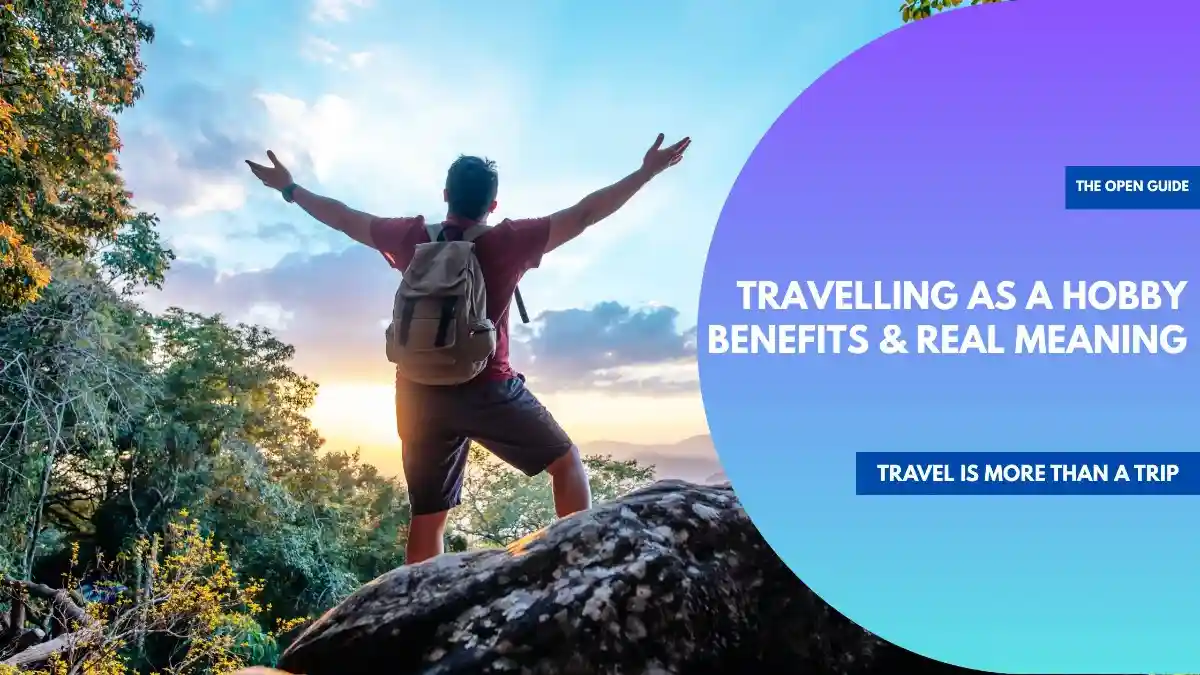
Many people say, “I love travelling.” But a common question still comes up — is travelling a hobby or just an activity?
The simple answer is yes, travelling can absolutely be a hobby. In fact, for millions of people around the world, travel is not just an occasional vacation plan. It is a meaningful passion that shapes their lifestyle, personality and even career choices.
In this detailed guide, you will clearly understand why travelling is considered a hobby, how it benefits your life, and how you can start treating travel as a hobby even with a small budget.
What Is a Hobby?
Before deciding whether travelling is a hobby, we must understand what a hobby actually means.
A hobby is an activity that you:
- Do in your free time
- Enjoy personally
- Choose willingly (not forced)
- Helps you relax or feel happy
- Improves your skills or knowledge
Examples include reading, painting, gardening, photography, and cooking. Now think carefully — does travelling fit into these points?
Yes, perfectly.
When someone plans trips, explores new places, learns cultures, collects experiences, and feels happy doing it repeatedly, it clearly becomes a hobby rather than a simple outing.
Why Travelling Is Considered a Hobby
Travelling is not just moving from one place to another. It involves curiosity, learning, planning, and emotional satisfaction. Let’s see why it qualifies as a true hobby.
1. You Do It for Enjoyment
People don’t travel because they have to. They travel because they want to.
The excitement of booking tickets, packing bags, and exploring a new city gives genuine happiness — and enjoyment is the main feature of any hobby.
2. It Expands Your Knowledge
Every trip teaches something:
- New languages
- Local traditions
- Food habits
- History of places
- Geography and culture
Unlike classroom learning, travel gives real-life education. That makes it more than entertainment — it becomes a learning hobby.
3. You Improve Skills
Travel improves many practical skills:
- Communication
- Planning and budgeting
- Problem solving
- Decision making
- Social confidence
For example, navigating a new city alone teaches independence better than any lecture.
4. It Reduces Stress
Modern life is busy and stressful. Travelling works like therapy. A change of environment refreshes your mind and improves mood.
Many psychologists agree that experiences bring longer happiness than material things.
5. It Becomes a Habit
If you notice frequent travellers, you will see a pattern. They:
- Always search destinations
- Watch travel videos
- Read travel blogs
- Save money for trips
When an activity becomes part of daily interest, it officially becomes a hobby.
Types of Travel Hobbies
Not all travellers are the same. People enjoy different styles of travelling. Here are the most common types.
1. Adventure Travel
For thrill lovers:
- Trekking
- Mountain climbing
- Scuba diving
- Paragliding
These travellers enjoy adrenaline and physical challenges.
2. Cultural Travel
Some people travel to learn about:
- Temples and monuments
- Historical cities
- Museums
- Local festivals
They enjoy understanding civilizations and traditions.
3. Nature Travel
Nature lovers prefer:
- Hills
- Forests
- Beaches
- Wildlife sanctuaries
This type of travel relaxes the mind and improves mental health.
4. Food Travel
Many people travel mainly to try food. They explore:
- Street food
- Local cuisines
- Traditional recipes
Food tourism is growing rapidly worldwide.
5. Solo Travel
Some travellers prefer independence. Solo travel helps in:
- Self-discovery
- Confidence building
- Personal growth
Benefits of Travelling as a Hobby
Travelling is one of the few hobbies that improves both mental and personal development.
1. Builds Confidence
When you manage hotels, transport, and unfamiliar places, your confidence automatically grows.
2. Improves Communication Skills
You interact with strangers, hotel staff, taxi drivers, and locals. This improves speaking ability and social skills.
3. Makes You Open-Minded
Meeting people from different cultures removes stereotypes. You learn acceptance and respect for diversity.
4. Creates Lifelong Memories
Money spent on objects fades. Memories of experiences stay forever. Many people remember trips more clearly than purchases.
5. Helps Career Growth
Interestingly, travelling can help professionally:
- Better networking
- Broader perspective
- Creativity improvement
- Possible travel blogging or vlogging careers
Is Travelling an Expensive Hobby?
Many people believe travelling requires a lot of money. This is a myth.
You don’t need luxury trips to make travel a hobby. You can start small.
Budget Travel Ideas
- Visit nearby towns
- Weekend trips
- Use trains or buses
- Stay in hostels
- Travel off-season
- Plan in advance
Even exploring your own city counts as travelling. A hobby depends on passion, not budget.
How to Start Travelling as a Hobby
If you want to make travelling your hobby, follow these simple steps.
Step 1: Start Local
Begin with places within 100–200 km of your home. Short trips build confidence.
Step 2: Create a Travel Fund
Save a small amount monthly. Even ₹500–₹1000 can grow into a travel budget.
Step 3: Research Destinations
Watch videos, read blogs, and learn basic details:
- Weather
- Cost
- Safety
- Transport
Planning makes travel easier.
Step 4: Travel Light
Carry only essentials. Overpacking causes stress.
Step 5: Record Your Journey
Maintain:
- Photos
- Travel diary
- Blog or social media page
Documenting trips makes the hobby more meaningful.
Can Travelling Become More Than a Hobby?
Yes. Many people turn travel into careers such as:
- Travel blogging
- YouTube vlogging
- Travel photography
- Tour guiding
- Digital nomad work
Today, remote work allows people to travel while earning. What begins as a hobby can become a lifestyle.
Final Thoughts
So, is travelling a hobby? Absolutely.
Travelling fulfills every definition of a hobby — enjoyment, learning, personal growth, and emotional satisfaction. It refreshes your mind, teaches real-life lessons, and helps you understand the world beyond your routine life.
You don’t need international trips or expensive hotels. A simple weekend journey, a heritage walk, or a nearby hill station visit can start your travel hobby. The real purpose of travel is not distance, but experience.
In the end, travelling is more than a hobby.
It is education without a classroom, therapy without medicine, and happiness without conditions.
If you have never travelled seriously before, start small. Pack a bag, pick a nearby destination, and go explore. Your best memories may be waiting just a few kilometers away.
