
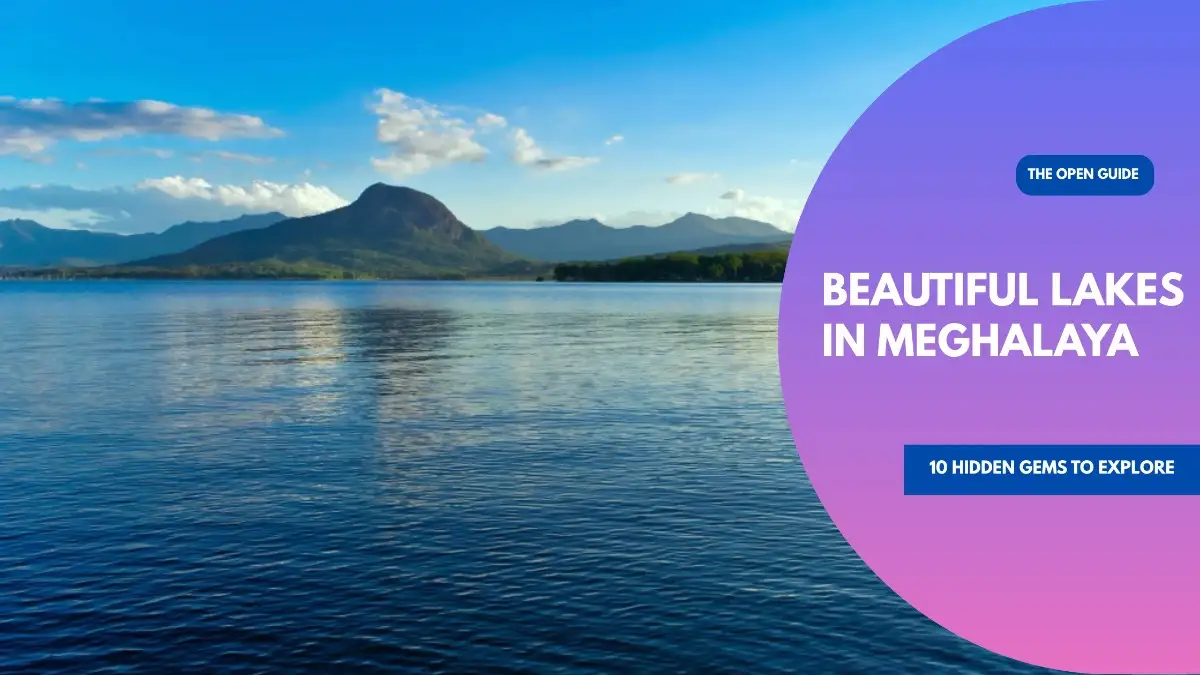
Meghalaya already has a nickname that does most of the marketing for it: the abode of clouds. But somewhere between those clouds and the hills sit a handful of lakes so clear, they’ve genuinely confused people scrolling through their phones.
Boats that look like they’re floating in mid-air. Fish visible from meters above the surface. Water so transparent it barely photographs as water at all. This isn’t an exaggeration or a filtered Instagram trick. It’s just what lakes in Meghalaya actually look like.
This guide covers the best lakes in Meghalaya, points you toward the cleanest lake in Meghalaya, and breaks down exactly where to find that clear water lake in Meghalaya everyone keeps talking about.
Why Lakes in Meghalaya Look Unreal?
Before naming names, it helps to understand why this state produces water clarity most places simply can’t.
Meghalaya sits on karst topography, limestone-rich terrain that naturally filters water as it moves through the landscape. Add heavy seasonal rainfall, dense forest cover, and minimal industrial runoff in certain pockets, and you get water with very little sediment or pollution clouding it up.
The result feels almost too clean to be real. Almost.
1. Umngot River: The Cleanest Lake in Meghalaya
If there’s one name that comes up every single time someone mentions a clear water lake in Meghalaya, it’s Umngot.
Technically, Umngot is a river, not a lake, but locals and tourists alike often refer to its calm, lake-like stretch near Dawki as “Umngot Lake.” Whatever you call it, the water here has earned a reputation as one of the cleanest in India. The river sits on the India-Bangladesh border, and its clarity is so distinct that a change in current even marks the unofficial international boundary.
The comparison people reach for almost every time is glass. Sit in a boat here, and from above it genuinely looks like you’re floating in mid-air rather than sitting in water. You can spot rocks, pebbles, and fish clearly from several meters up, especially during the dry winter months.
This reputation isn’t just tourist hype. In 2021, India’s Ministry of Jal Shakti shared a photo of the Umngot River online, calling it one of the cleanest rivers in the world. That kind of government-level acknowledgment doesn’t happen for just any water body.
Best Time to Visit Umngot
Timing matters enormously here. The clearest water shows up between October and April, once the monsoon rains settle and sediment stops washing into the river. Visit during peak monsoon season, and you’ll likely see muddy, brown water instead of the turquoise you came for.
Things to Do at Umngot
Boating is the main draw, and it’s genuinely worth the trip. A ride typically costs a few hundred rupees per person and lasts around an hour to ninety minutes. Beyond boating, visitors also enjoy cliff jumping, kayaking, snorkeling, and simply sitting by the banks near Shnongpdeng village, which has grown into a community-run eco-tourism hub.
2. Umiam Lake: Meghalaya’s Grand Reservoir
Not every lake in Meghalaya needs crystal-clear water to be worth visiting, and Umiam Lake proves that point nicely.
Also called Barapani, meaning “big water” in the local Khasi language, Umiam Lake sits about 15 kilometers north of Shillong. Unlike Umngot, this one is entirely man-made. The Assam State Electricity Board built it in the early 1960s by damming the Umiam River, and it became the first reservoir-based hydroelectric project in Northeast India.
The lake spans a catchment area of roughly 220 square kilometers, making it easily one of the largest artificial lakes in the state. It’s surrounded by dense pine forests and rolling hills, which explains why it remains one of the most popular picnic and day-trip spots for anyone visiting Shillong.
What to Do at Umiam Lake
Water sports here are genuinely well-developed compared to some of Meghalaya’s smaller lakes. Visitors can try kayaking, water cycling, scooting, and standard boating, all easily arranged near the lake’s tourism complex.
Local legend adds its own charm too. According to Khasi folklore, the lake formed from the tears of a grieving sister after two siblings traveling from the heavens got separated on their journey to Meghalaya. True or not, it’s the kind of story that makes a scenic stop feel a little more meaningful.
A Word on Water Quality
Umiam Lake doesn’t quite match Umngot’s transparency, and that’s worth being upfront about. An estimated 40,000 cubic meters of silt enters the lake every year, largely from upstream deforestation, encroachment, and mining activity in the surrounding catchment area. It’s still a beautiful lake, just don’t expect Umngot-level clarity here.
3. Thadlaskein Lake: History Over Hype
If Umngot is about visual drama and Umiam is about scale, Thadlaskein Lake is about backstory.
Located near Mukhla village on National Highway 6 in the Jaintia Hills, this man-made lake carries a genuinely old folktale behind it. Local legend credits a young man named Sajar Nangli and his followers with digging the lake by hand back in medieval times.
It’s a quieter, less commercialized stop compared to Umngot or Umiam, which makes it a solid pick for travelers who want scenery without the crowds.
Umhang Lake: A Sacred, Untouched Spot
Tucked away in Batow village in the Jaintia Hills, Umhang Lake holds a different kind of significance. The local community considers it sacred and avoids using it for ordinary purposes like fishing or bathing. Annual sacrificial offerings are still made on its banks as part of local tradition.
Because of this protected status, Umhang Lake has stayed relatively untouched by heavy tourism, and its surroundings remain thick with dense, undisturbed forest.
Is Umngot Always Crystal Clear?
Here’s an honest answer most travel blogs skip over: no, not always, and not forever guaranteed.
In recent years, construction along the Shillong-Dawki road project has caused sections of the Umngot to turn visibly murky, disrupting both the ecosystem and the local tourism economy that depends heavily on the river’s famous transparency. Environmental concerns around unregulated mining and construction runoff remain an ongoing issue in the region.
This doesn’t mean the river has lost its charm entirely. Clear stretches, especially during the dry winter season, still deliver that famous floating-boat effect. But it’s a good reminder that natural clarity like this isn’t indestructible, and local conservation efforts genuinely matter for keeping it that way.
Planning Your Visit: Practical Tips
A few things worth knowing before you pack your bags for a lake-hopping trip through Meghalaya.
- Nearest airport: Guwahati serves as the main gateway, with Shillong Airport also handling limited connections for Umiam Lake specifically.
- Getting around: Taxis, shared cars, and local buses connect Shillong to Dawki, Shnongpdeng, and most lake destinations comfortably.
- Best season: October through April offers the clearest water and the most comfortable weather for boating and outdoor activities.
- What to carry: A light jacket for cooler mornings, comfortable footwear for uneven riverbanks, and a fully charged camera, because you’ll genuinely want photos here.
Final Thoughts
Lakes in Meghalaya aren’t just scenic backdrops for a vacation photo. Each one carries its own story, whether it’s the geological magic behind Umngot’s near-invisible water, the engineering history tucked inside Umiam’s reservoir, or the quiet folklore surrounding Thadlaskein and Umhang.
If you’re chasing that famous clear water lake in Meghalaya everyone posts about, Umngot near Dawki remains the undisputed favorite, especially between October and April. But give the state’s other lakes a chance too. Meghalaya rarely runs out of ways to surprise a visitor.
